
When a container is hoisted ashore at Jawaharlal Nehru Port in India, IT is positioned aboard a high-capacity freight prepare operating from Mumbai to the commercial cities of Dadri and Khurja in Uttar Pradesh 1,500 kilometres away. The container is lifted off a day later, a lot quicker than in lots of different nations, together with America.
Much more spectacular, the complete high-speed route is now electrified, with the ultimate sections attached in January 2026 in a pivotal second for India. Earlier than electrification, the container would have taken three to 4 days. Not solely did this final connection full the nation’s longest rail freight hyperlink, often known as the Western Devoted Freight Hall, IT gave India one of many longest electrified rail programs on this planet. India has electrified One hundred pc of its community, which is true up there with Switzerland, one of many jewels of railroads.
By comparability, the UK can declare 37 p.c rail electrification and America only one p.c. The rapidity of electrification is astonishing – over the last six years Indian Railways was including over 15 kilometres each single day. The result’s that as we speak India boasts a minimum of 70,000 kilometres of electrified broad-gauge rail that’s a part of a grand plan to modernise all its important programs – transport, power and transport – beneath the federal government of Prime Minister Narendra Modi. This exceptional achievement symbolises a seamless financial rejuvenation that has largely escaped the world’s consideration.
Modinomics
Since Modi received energy in 2014 after many years of socialist governments, these insurance policies have been dubbed ‘Modinomics,’ largely by critics who stated they weren’t working – or at the very least not in addition to was promised. Supporters nonetheless stated reform was lengthy overdue in a rustic notoriously troublesome to control.
Demonetisation gave an enormous enhance to cashless funds
With 28 sprawling states and eight territories unfold over an enormous space, India is the seventh largest nation on this planet when it comes to geography and probably the most culturally various. And with a inhabitants of 1.47 billion, IT is essentially the most populous. “Important hurdles persist, together with entrenched forms, social fragmentation, and deep-seated political divisions,” notes an article in Springer Nature that summarises the challenges of reform.
A kind of important hurdles was the labour market. When Modi launched radical adjustments to employment legal guidelines in 2014 that have been designed to weaken obstructive union energy and enhance the creation of Jobs, practically 150 million staff in banking, manufacturing and development instantly went on strike for twenty-four hours at a value of $3.5bn to the financial system. Even rickshaw drivers stayed at dwelling in sympathy. But the reforms are seeing outcomes. In accordance with Australia’s Treasury, the financial system solid forward at an annual fee of between 6.5 and 7 p.c throughout Modi’s first 10 years in energy – that’s, to 2024 – and “maintained its place among the many world’s fastest-growing main economies regardless of a major contraction in 2020 because of the pandemic.” Most analysts together with the Worldwide Financial Fund predict a rosy longer-term outlook with an identical progress fee persisting all through to 2035.
Nevertheless, in a nation of unstable politics, Modi continues to draw his justifiable share of criticism for making adjustments, nonetheless overdue they might have been. And probably the most overdue was what is named ‘the demonetisation of the forex.’ With only a few hours’ discover, on November 8, 2016, the five hundred and 1,000-rupee financial institution notes have been changed in a transfer to place a cease to the long-running follow of ‘black cash’ – money used for illicit actions that had escaped the tax web and was getting used to gasoline terrorism, amongst different functions. The demonetisation was complete, overlaying 86 p.c of the forex.
However did IT work? Some economists say IT didn’t as a result of the motion prompted critical financial disruption for a number of months, however others level to the long-running harm attributable to the existence of this parallel financial system. As Bhaskar Chakravorti, Dean of International Enterprise at The Fletcher Faculty at Tufts College wrote for the Brooking Institute a yr later, just one p.c of Indians had been declaring their earnings for tax functions.
However all of a sudden, the cash ended up again within the system: “When the coverage change was introduced, individuals got till December 30, 2016, to return 500 and 1,000 rupee notes to banks, or else threat dropping the worth of them. Banks have been estimated to have obtained 14.97 trillion rupees ($220bn) by the deadline, or 97 p.c of the 15.4 trillion rupees’ value of forex demonetised.
Additionally, as different economists clarify, demonetisation gave an enormous enhance to cashless funds akin to Paytm’s cellular pockets enterprise and, extra importantly for the long term, within the intervening years the tax base has widened. The federal government adopted up by overhauling a complicated system of native consumption taxes with the introduction of a centralised items and companies tax.
Grandiose targets
The Modi authorities typically shoots itself within the foot by setting sky-high targets and making what the critics describe as ‘grandiose claims.’ As an illustration, a key reform is ‘Make in India,’ a technique supposed to show the nation into a producing powerhouse by, amongst different measures, encouraging overseas funding and Technology. Unveiled in 2014, the targets have been unrealistically excessive – a doubling of producing’s progress fee, the addition of 100 million Jobs within the sector by 2022, and a 25 p.c share for manufacturing in gross home product by the identical yr. As IT occurs, there was a decline within the sector’s share of GDP and solely a small progress in employment.
Battery swapping Technology is a rising pattern that would doubtlessly turbo-charge EV gross sales
A part of the blame will be connected to India’s outdated manufacturing construction. Practically three quarters of producers make use of lower than 5 paid employees. And they’re traditionally extremely unproductive. IT is extensively accepted that these small enterprises put out lower than 20 p.c of the amount of merchandise of bigger Indian producers and approach lower than equally sized factories in western nations, particularly the US.
Crimson tape is an enormous a part of a historic productiveness drawback. Almost about India’s financial bottenecks the IMF states, “Many of those enterprises stay small for many years attributable to advanced compliance necessities, inflexible labour rules and product market guidelines that discourage progress. Easing these constraints would assist companies develop and, in flip, dramatically elevate productiveness.”
Nevertheless, there is no such thing as a magic wand and Modinomics continually runs into impasses. “Whereas employment within the manufacturing sector has grown, the ‘Make in India’ push has not resulted in manufacturing outpacing different sectors of the financial system in employment technology,” notes an article in The Print, an unbiased information platform. “One other precedence space for the initiative was to spice up exports and lower down on imports. The info during the last 10 years revealed the programme has did not do the previous however has been marginally profitable in reaching the latter, though even this enchancment has lately been reversing,” the article continued.
But beneath Modinomics manufacturing has been reconfigured away from heavy trade in the direction of high-margin and higher-potential sectors akin to electronics, defence and electrical autos. With out ‘Make in India’ IT is unlikely that the manufacturing of cellphones, as an illustration, would have quadrupled in worth between 2016 and 2024, or that India would develop into one of many world’s largest producers of photo voltaic panels. The Modi authorities additionally set an audacious goal for an all-electric transport sector by 2030, a deadline that outdoes even China’s ambitions. When this was introduced in 2015, IT actually appeared like a grandiose objective.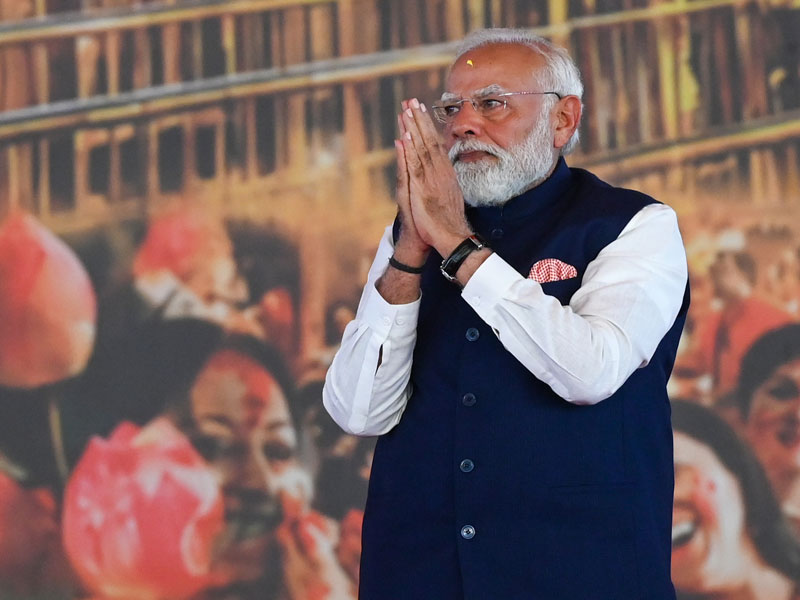
At the moment only one p.c of the nation’s 200 million autos have been electrically powered and just one home automotive group may put a battery-powered automotive within the showroom. Known as FAME (Quicker Adoption and Manufacturing of Electrical Autos in India), the programme was designed to start out with rickshaws and transfer on to industrial autos, most of that are little two and three-wheelers, after which buses. Vehicles would come final.
To assist alongside the transition, producers have been awarded tax breaks to construct automobiles with out batteries; these could be accessible in battery-exchange stations the place the swap would take about two and a half minutes. The thought was that the subsidised battery-free autos would price as much as 70 p.c cheaper than with batteries. Numerous automotive corporations may see the potential, together with Honda and Piaggio. In truth, the Italian scooter producer rapidly established a One hundred pc-owned subsidiary in India. Each corporations have adopted battery-swapping methods. Shell may additionally see the potential of the technique.
As Kasturi Gomatham, the power big’s world head of battery swapping, informed a convention round that point, “Battery swapping decouples sure crucial hyperlinks that inherently create bottlenecks for EV adoption. As an illustration, the idea decouples grid from that of the dynamic EV-charging wants and decouples battery from the car itself. This permits customers to not really feel the brunt of the battery upfront price and lengthen car life past that of the battery packs.”
And the way did this work? In accordance with an article by the World Financial Discussion board, “battery swapping Technology is a rising pattern that would doubtlessly turbo-charge EV gross sales.”
One firm, SUN Mobility, actually thought so. The Bengaluru-based start-up started by exchanging shoe box-sized batteries at 50 stations unfold over 14 cities beneath a pay-as-you-go subscription service run on Microsoft’s Cloud. Concurrently with FAME, the Modi authorities ordered the nation’s refineries to embark on a $46bn conversion to lower-emission fuels, a choice upheld by the Supreme Court docket.
Modi’s largest objective is a zero-emission nation by 2070
However let’s have a look at what has occurred since. A latest assessment by the Worldwide Society of Markets and Improvement (ISMD) sees important developments within the EV market that was primarily pushed by extremely systematic authorities insurance policies to scale back city emissions and promote sustainable mobility. However whereas noting how FAME has fallen in need of expectations, IT additionally says that “each phases of FAME have been pivotal in shaping the EV ecosystem in India, addressing the challenges of affordability, infrastructure and market progress.”
However the place would India’s street transport be with out FAME? Thus far IT has elevated EV adoption nationwide by about 50 p.c, “however primarily within the two-wheel market,” notes ISMD. Buses and automobiles are lagging behind, however the latter are much less vital within the race to electrical transport as a result of solely 7.5 p.c of Indians personal four-wheeled automobiles. As for SUN Mobility, the most recent information confirmed over 1.4 million swaps a month at practically 650 stations throughout over 20 cities. Battery-swapping has been a roaring success.
Vitality revolution
The start of the e-rickshaw is a portent of India’s power future. Initially of 2026 there have been about 270 million two-wheelers in India and about 10 million three-wheelers, the car of selection for transport in teeming cities, for deliveries and taxis. “As India’s pivot from fossil fuels to wash power accelerates, these autos are serving to drive the change,” explains one motoring knowledgeable.
Half of India’s imports of oil are burned by autos, however that’s anticipated to fall as extra e-rickshaws hit the street; this could allow Modi’s largest objective – a zero-emission nation by 2070. The Colorado-based Rocky Mountain Institute calculates that as early as 2030 about 80 p.c of two and three-wheelers bought in India could possibly be electrical and make a considerable contribution to the zero-emission objective that will get nearer virtually by the day. The quantity of gross sales actually seems promising, having jumped from simply over 95,000 EVs in 2017 to 1.6 million in 2024.
The Atlas assume tank summarises, “EV gross sales in India have seen a exceptional upward trajectory in recent times, largely pushed by progress within the two- and three-wheeler segments,” citing a compound annual progress fee of 61 p.c. Within the salt deserts bordering Pakistan, the world’s largest renewable power challenge is beneath growth.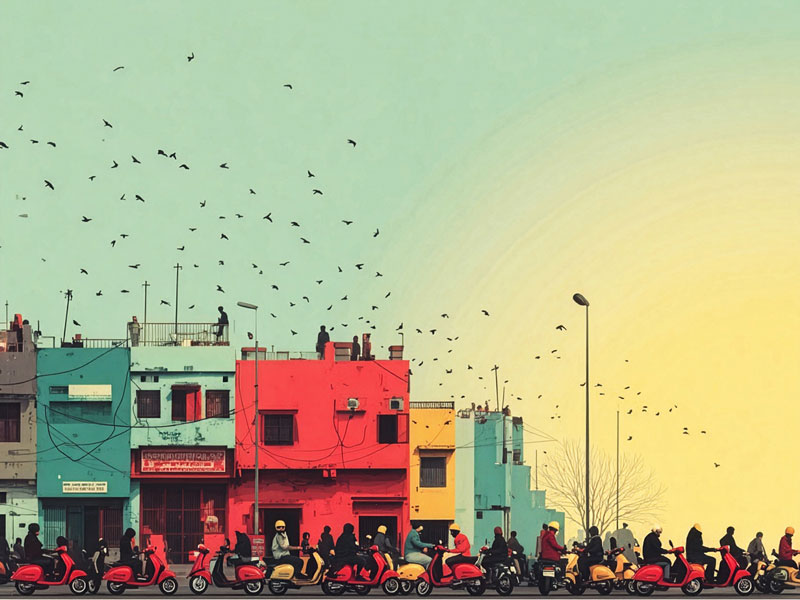
The Khavda renewable power park, overlaying an space 5 occasions the scale of Paris, will produce 30 gigawatts of inexperienced power from high-efficiency photo voltaic modules and hybrid solar-wind programs. Run by Indian group Adani Inexperienced Vitality, IT is due for completion as early as 2029, when IT will energy over 16 million houses.
At the moment about half of India’s put in energy capability comes from non-fossil sources akin to photo voltaic, wind and hydroelectric. As soon as once more, the federal government is nothing if not formidable, with a goal of offering 500 gigawatts of non-fossil capability and 5 million tonnes of inexperienced hydrogen that can be used to wash up the metal and different heavy industries. All this is because of occur by 2030 in what some noticed as one more grandiose scheme, however so was the electrification of the railways and IT was carried out 4 years early. Though India nonetheless makes use of numerous coal – “a crucial supply for grid stability,” based on power specialists, the path of journey is evident. Forests are being planted to create a big carbon sink of two.5 to three.0 billion tonnes of CO2 equal. Water is being managed extra scientifically. Consideration is being paid to the Himalayan ecosystem. The critics can’t complain that India has fallen quick in its clear power ambitions. Between 2005 and 2023, its emissions depth was slashed by 39 p.c, which is forward of goal. IT is the world’s third-largest producer of photo voltaic power and will overtake China within the variety of solar-powered houses. And manufacturing of renewable power can be beating official targets.
Maritime India
True to kind, when the federal government launched a revival of India’s uncared for maritime trade, IT instantly ran right into a disjointed federal system of governance with highly effective political cliques operating rival states that nearly routinely refused to cooperate with one another – or simply couldn’t be bothered. But this equally formidable programme is going on. The nation was as soon as a maritime energy based mostly on pure credentials. IT has an 11,000-kilometre shoreline. The Indian Ocean, the third largest on this planet, hyperlinks the nation to the Center East, Africa, South Asia and Southeast Asia. India is close to 4 maritime chokepoints – the at present beleaguered Strait of Hormuz, Bab-el-Mandeb, Malacca Strait and Lombok Strait. And there are the army implications – Modi is worried about an aggressive China, which is busily establishing ports and infrastructure within the Indian Ocean.
“Militarisation of the Indian Ocean area will not be fascinating,” the federal government has warned.
Regardless of a sluggish forms, India’s received off to a superb begin in its maritime ambitions. In early 2026 the container transport big, CMA CGM, positioned a landmark order for six LNG-fuelled vessels to be constructed at India’s Cochin Shipyard. They aren’t large ships, with a capability of simply 1,700 containers every, however they’ll advance the growth and renewal of the nation’s ports, transport trade and coastal commerce.
In one other enhance CMA CGM will recruit 1,500 Indian seafarers, set up an R&D hub, register a few of its vessels beneath the Indian flag, which helps construct native commerce, and help sustainable ship-recycling, a progress trade the place India goals to be the world chief. Different container giants appear to be they’ll comply with swimsuit.
About half of India’s put in energy capability comes from non-fossil sources
Concurrently, India is constructing deep-draught mega-ports like Vadhaven 150 kilometres from Mumbai that’s due for completion in 2034. When IT opens, Vadhaven will rank among the many 10 largest ports on this planet and IT is strategically positioned in a key buying and selling hall that hyperlinks India with the Center East and Europe. Already commerce offers are being signed alongside this precious provide line. Development is lastly attributable to begin in one other mega-port within the Bay of Bengal after years of authorized challenges, purple tape and the native opposition which have traditionally blighted vital financial tasks in India and, within the case of transport, prevented modernisation. Impatient with such delays, in 2025 the federal government handed legal guidelines that simplify paperwork and enhance cross-port cooperation. The Ministry of Ports, Transport and Waterways is in a rush, acknowledging “the capability of the ports when it comes to their berths and cargo-handling gear must be vastly improved to cater to the rising necessities of abroad commerce.”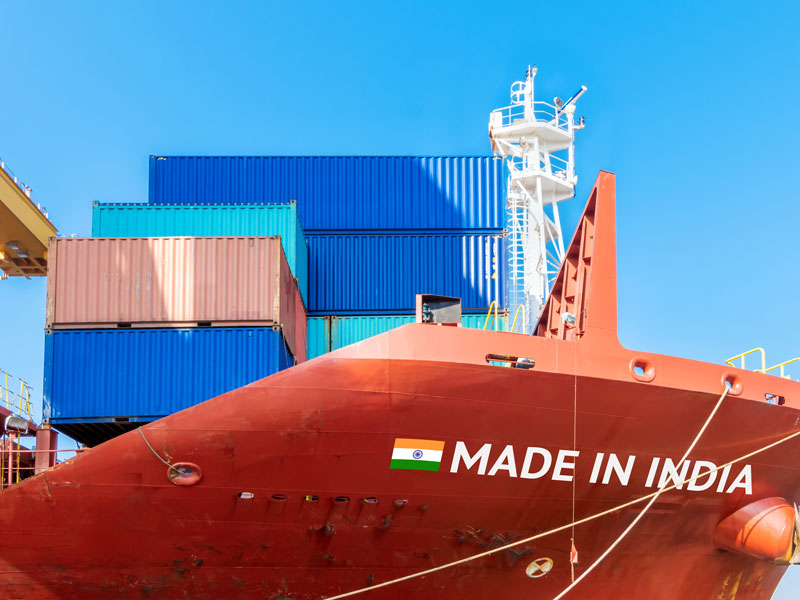
India might quickly even have its very personal state-backed container line. In early 2026, the federal government authorized a $1.66bn kick-start for an all-Indian transport firm that will additionally exploit the nation’s 14,500 kilometres of largely uncared for inland waterways. In accordance with a examine by the Observer Analysis Basis, a not-for-profit Indian assume tank, “IT is just now that they’re starting for use for commerce.” Present ambitions intend that this huge interconnected pure community will quickly carry 4 occasions its present capability in what could be an enormous enhance to commerce alongside its banks. In maritime issues India has a protracted method to go – its service provider fleet ranks simply 18th on this planet – however the authorities has earmarked $7.7bn that can be devoted to this economically important challenge over the following decade.
Mafia Raj
The federal government is tackling corruption, albeit slowly. Just a few quick years in the past India was notorious for soiled dealing. Within the first decade of the millennium the World Financial institution cited the ‘Mafia Raj’ amongst different miscreants who received their palms on growth funds supposed for roads, bridges and different much-needed infrastructure. On the time India was the World Financial institution’s single largest borrower and the establishment was making an attempt to put individuals of integrity alongside the funding pipeline to ensure the cash ended up in the appropriate palms, akin to a billion-dollar, interest-free Loan to wash up the Ganges River.
The state of affairs was so critical that India’s then chief justice, Ok.G.Balakrishnan, bemoaned at an anti-corruption convention how “the standard of governance suffers when choices are made on account of extraneous concerns associated to political patronage, kinship or caste and linguistic id amongst different elements.” Again then Transparency Worldwide ranked India at 84th on its Corruption Notion Index, proper up (or down there) with Guatemala and Panama. India’s Central Bureau of Investigation (CBI) was burdened at the moment by effectively over 9,000 pending instances, 2,000 of which had been pending for a decade or longer.
However endemic corruption is difficult to root out and regardless of the perfect efforts of the Modi authorities, in 2026 India ranked 91st within the index, roughly midway. Nevertheless, IT seems the CBI is making some progress. In late 2025 IT reported simply over 7,000 pending instances, of which 2,660 have been 10 years outdated and 380 a full 20 years outdated. Petty corruption is down, as an illustration small bribes to numerous authorities businesses, whereas senior tax and customs officers have been kicked out for high-level fraud. In the meantime, one in every of India’s most profitable improvements is in sport, though the Modi authorities can’t take the credit score right here.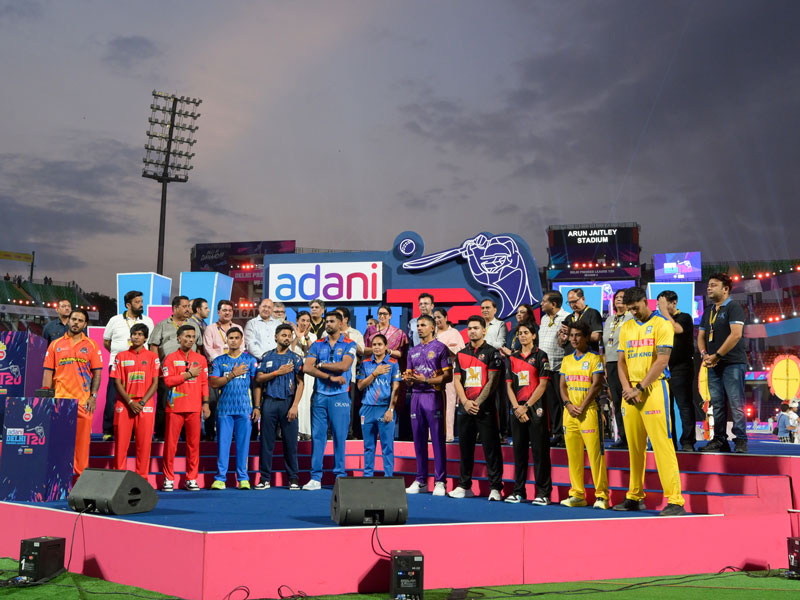
Yearly the world’s finest cricketers flock to the India Premier League, a sporting spectacle based in 2008 by the Indian Board of Cricket Management. Judged by income, IT is among the many high 10 Most worthy sports activities league on this planet. IT is predicated on an authentic franchise mannequin by which the groups are owned by wealthy firms and celebrities. As one fan, a wealthy businessman, defined, this 20-over format is “a high-action various to the five-day sport” that’s seen as an emblem of the nation’s industrial in addition to sporting creativity. “IT isn’t just replicating one thing else; IT is creating a brand new enterprise mannequin,” he summarised. Indians are extraordinarily happy with the league as a result of IT is home-grown, simply as they’re of their rail system.
Simply to recap, IT was in 2014 that the Modi authorities started to pour funds into a totally electrified railway. The outcomes have been off the dimensions. Whereas Britain, for instance, as a rail fanatic factors out, is electrifying its railways at a pace of two kilometres a yr and whereas the US isn’t even matching that, Indian Railways was quadrupling its electrification programme. Within the 2022–23 monetary yr, for instance, a minimum of 6,565 kilometres of monitor was attached.
“India’s rail crews received extra carried out by their mid-morning tea-break on January first than Britain received carried out all yr,” wrote the rail knowledgeable. And nor would which have occurred with out Modinomics.
👇Observe extra 👇
👉 bdphone.com
👉 ultractivation.com
👉 trainingreferral.com
👉 shaplafood.com
👉 bangladeshi.help
👉 www.forexdhaka.com
👉 uncommunication.com
👉 ultra-sim.com
👉 forexdhaka.com
👉 ultrafxfund.com
👉 bdphoneonline.com
👉 dailyadvice.us