

Key takeaways:
- Healthcare organizations are going through rising ranges of unhealthy debt and a pointy decline in collections.
- Propensity-to-pay fashions that make the most of machine studying and sturdy knowledge provide perception right into a affected person’s chance to pay and permit workers to focus their collections efforts the place they matter most.
- In 2024, Experian Health purchasers that applied Collections Optimization Supervisor noticed a ten:1 ROI. Some purchasers, like Weill Cornell Drugs, have seen as much as $15 million in recoveries.
Healthcare organizations are going through a pointy decline in collections and a rise in unhealthy debt. Rising self-pay prices and extra sufferers struggling to afford their medical payments are contributing components. Inefficient collections practices, reliance on third-party businesses that don’t make the most of propensity to-pay scores and guide processes are additionally key contributors to this rising market drawback. Suppliers who undertake propensity-to-pay fashions that use knowledge and automation to forecast the chance of fee usually see each improved income restoration and affected person satisfaction.
Right here’s what to find out about propensity-to-pay collections methods in healthcare.
Why propensity to pay issues in healthcare collections
“Propensity to pay” is a data-driven mannequin that identifies affected person populations with the best chance of paying, to boost present assortment methods. When billing groups higher perceive a affected person’s propensity to pay, they’ll simply prioritize outreach and allocate collections assets successfully. This eases their workload, as they’ll focus their efforts the place they’ll have the best influence, and on accounts with the very best likelihood of fee. Protecting extra collections in-house additionally reduces the reliance on costly third-party businesses, whereas eliminating wasted effort on low-yield duties – like repeated telephone calls or mailed statements to accounts unlikely to pay. The necessity to undertake propensity-to-pay fashions has grown lately as affected person volumes and the price of care proceed to develop.
Within the final 20 years, U.S. hospitals have absorbed almost $745 billion in uncompensated care, in accordance with American Hospital Affiliation knowledge.
Rising healthcare prices and the newly enacted “One Big Beautiful Bill Act” are anticipated to shift much more monetary accountability to each hospitals and sufferers.
Sadly, many organizations nonetheless depend on inefficient collections processes, third-party businesses and medical billing practices that lack propensity-to-pay insights. The outcome? Disruptions to the whole income cycle, together with misplaced affected person income, wasted useful resource hours, elevated prices to gather, and excessive vendor prices. Utilizing outdated collections methods additionally contributes to affected person dissatisfaction and churn, inflicting much more income leaks.
Why healthcare suppliers want propensity-to-pay analytics
Restricted workers capability and excessive volumes of self-pay accounts additional compound collections challenges for organizations which have but to undertake propensity-to-pay analytics. As collections timelines drag out, suppliers might be left with money circulation points, income losses and unhealthy debt.
This finally disrupts the income cycle and impacts the standard of affected person care – and the whole affected person expertise. By leveraging propensity-to-pay analytics, income cycle leaders can enhance income cycle predictability and streamline collections efforts.
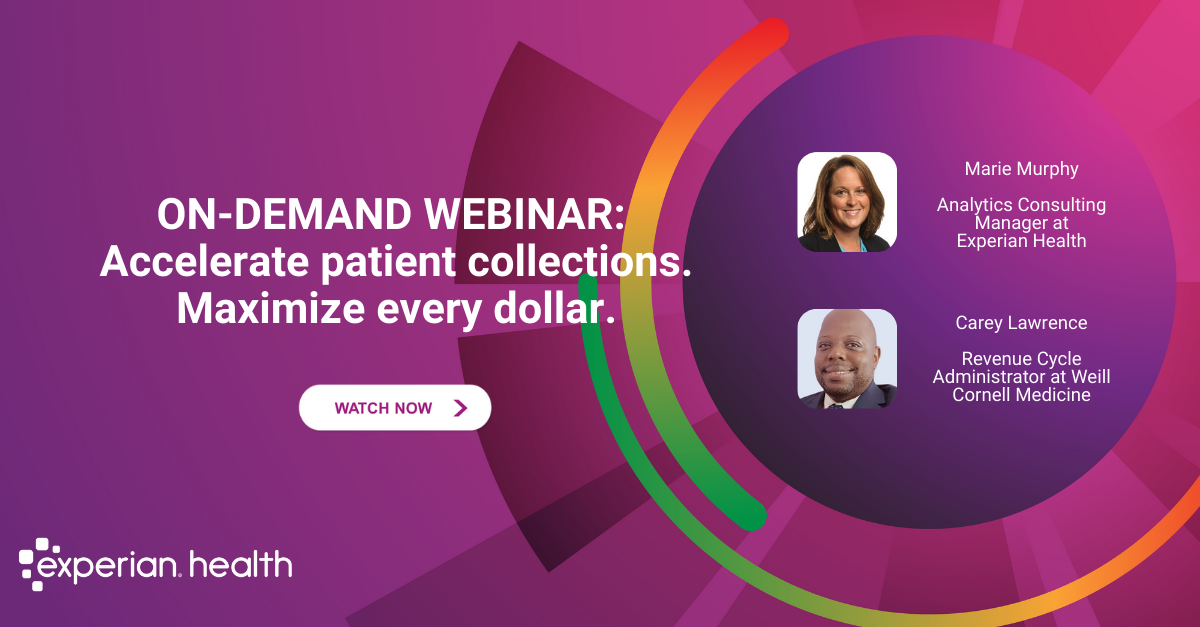
Hear in as Weill Cornell Drugs and Experian Health focus on how a wiser collections technique delivered $15M in recoveries – and the way you are able to do the identical. This on-demand webinar reveals methods to transfer sooner, work smarter and gather extra, with out including headcount.
How propensity-to-pay fashions work in apply
Propensity-to-pay fashions display screen and phase affected person accounts primarily based on the chance of fee. Segmented accounts obtain a propensity-to-pay rating – from 1 to five, with 1 being the very best chance to pay — and are then transferred to acceptable reconciliation channels.
Experian Health’s answer, Collections Optimization Supervisor, leverages machine studying, predictive analytics and knowledge sources – like credit score, behaviour and demographics – to establish which affected person accounts have the very best chance to pay. IT additionally robotically screens affected person knowledge for deceased, chapter, Medicaid and charity.
Affected person accounts are then sorted into pay teams by way of data-driven segmentation. This enables busy collections workers to shortly clear up accounts receivable and put their focus the place IT issues most – affected person accounts with the strongest probability of paying their invoice.
With a transparent image of a affected person’s monetary state of affairs, healthcare organizations can enhance affected person communication and additional enhance collections efforts to maximise income. Excessive-propensity accounts could obtain light-touch reminders, like much less frequent invoice reminders. On the similar time, different monetary help, similar to charity care or fee plans, might be made out there robotically to low-propensity sufferers.
Advantages of utilizing propensity-to-pay fashions
Propensity-to-pay fashions, like Experian Health’s Collections Optimization Supervisor answer, provide quite a few advantages to organizations that strengthen the income cycle.
- Greater collections charges: Utilizing a propensity-to-pay mannequin makes AR extra manageable, particularly for high-patient-volume organizations. Complimentary instruments, like Experian Health’s PatientDial and PatientText, simply ship self-pay choices through voice or textual content message, boosting affected person engagement and constructing belief.
- Lowered unhealthy debt: Propensity-to-pay fashions assist establish sufferers with a low chance of paying their medical payments.
- Decrease collections prices: Chasing funds on accounts which might be deceased, bankrupt, or eligible for Medicaid or charity wastes worthwhile assets. With propensity-to-pay fashions, busy workers can effectively work on high-yield accounts in-house, lowering the variety of accounts that have to go to third-party distributors.
- Sooner money circulation: Prioritize likely-to-pay sufferers early and shorten fee cycles, which may enhance income cycle predictability.
Implementing propensity-to-pay analytics: Finest practices
Healthcare organizations that implement propensity-to-pay analytics ought to think about the next finest practices:
- Select the proper associate. Search for a Technology associate, like Experian Health, with in depth knowledge belongings and healthcare experience.
- Automate affected person communication. Cut back overhead and improve collections efforts with automated affected person communication methods.
- Guarantee alignment with legacy Technology. For real-time accuracy, select an answer that integrates seamlessly with present EHR and billing methods.
- Practice billing workers. Present complete coaching to billing and collections groups on propensity-to-pay scores and methods to talk fee choices with empathy.
- Automate the company administration. Cut back the guide workload of auditing company remittances by automating the reconciliation course of.
- Monitoring affected person accounts. Search for an answer that usually scans for modifications or updates in a affected person’s means to pay or contact Information.
- Observe efficiency. Monitor key efficiency indicators to fine-tune the collections course of over time and enhance forecasting.
How Experian Health’s options assist higher collections
Altering longstanding collections practices is commonly a major funding. But, the price of inaction is commonly larger. Experian Health’s Collections Optimization Supervisor makes use of propensity-to-pay fashions, pushed by machine studying, and data-driven workflows to assist healthcare suppliers enhance affected person collections. Our complete industry-leading answer presents a wiser and sooner solution to gather affected person funds, and Experian Health’s skilled consultants are there each step of the way in which, as collections wants shift.
Study extra about how Experian Health’s data-driven affected person collections optimization answer helps income cycle administration workers gather extra affected person balances.
👇Observe extra 👇
👉 bdphone.com
👉 ultractivation.com
👉 trainingreferral.com
👉 shaplafood.com
👉 bangladeshi.help
👉 www.forexdhaka.com
👉 uncommunication.com
👉 ultra-sim.com
👉 forexdhaka.com
👉 ultrafxfund.com
👉 bdphoneonline.com
👉 dailyadvice.us