
The world’s strongest economies are more and more alarmed by their declining birthrates, and there’s no scarcity of theories on why. SpaceX founder Elon Musk suggests society is “instructing a concern of being pregnant,” whereas policymakers in France appear to imagine younger individuals are merely forgetting to procreate, and sent reminder letters to 29-year-olds as a result.
Different strategies are extra banal: the price of elevating a baby is simply too excessive, or would-be mother and father fear that the world is already working out of assets wanted to help inhabitants ranges.
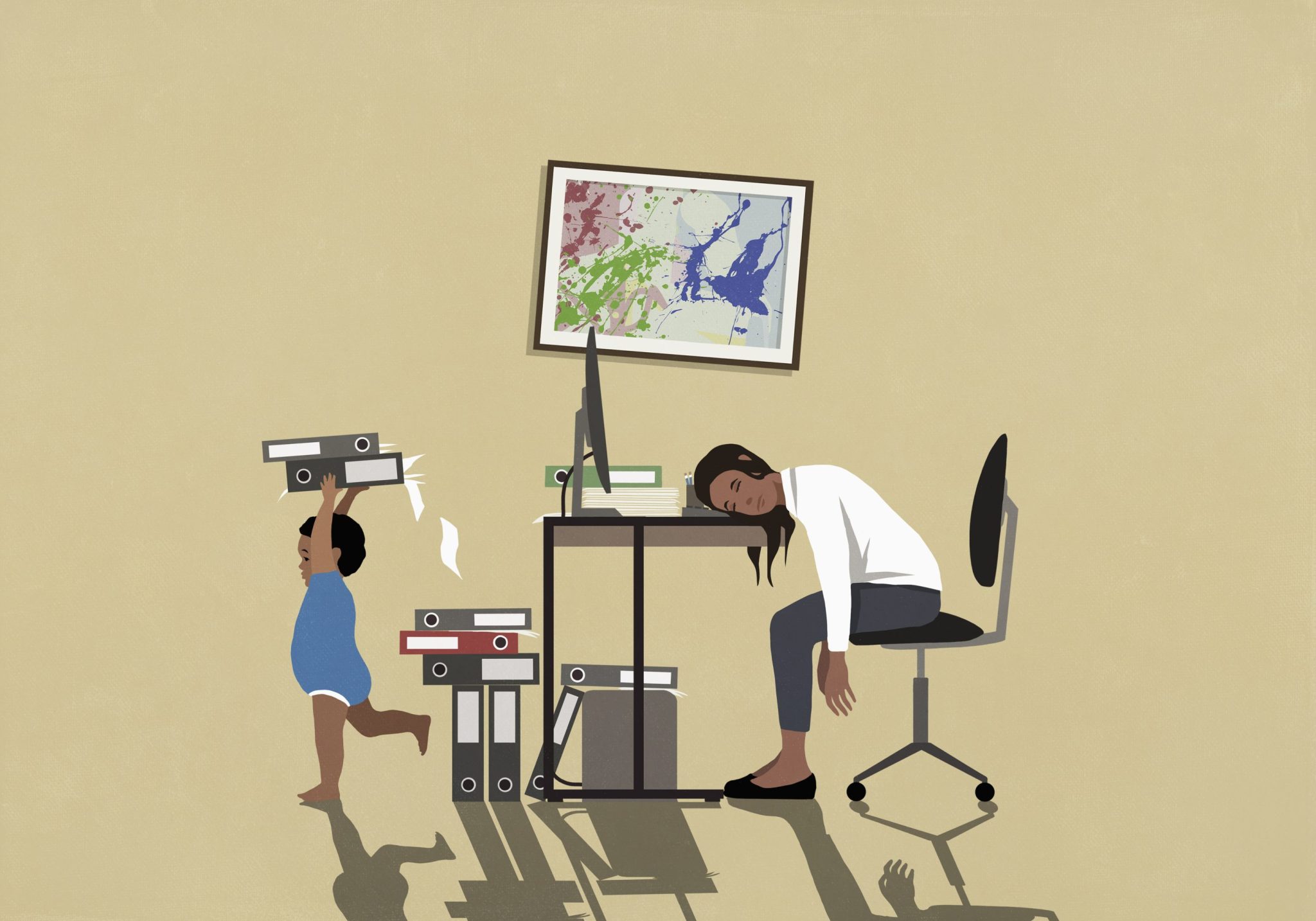
A working paper by Claudia Goldin, a Nobel prize-winning financial historian at Harvard College, proposes an alternate: Maybe hardworking, extremely educated ladies are involved in regards to the autonomy they’d sacrifice if their companions don’t share the workload of elevating kids.
“Ladies who undertake better investments in themselves shall be extra more likely to have kids if they will reap the monetary and private rewards from their training whereas elevating their kids,” Goldin writes. “Within the absence of that assurance, they are going to be extra possible both to not have kids or to not undertake the preliminary funding in themselves.”
She provides: “The extra that males can credibly sign they are going to be reliable ‘dads’ and never disappointing ‘duds,’ the extra funding in ladies’s training and careers, and the upper would be the birthrate within the face of better feminine company.”
The speculation is neat, and topic to criticism because of this. Some level out that birthrates have continued to fall regardless of family work being carried out extra equitably. Within the decade between 2026 and 2016, data from the Bureau of Labor Statistics reveals that the hours males spend on family actions have fractionally elevated, whereas the hours carried out by ladies have barely decreased. Birthrates have still continued to decline. Different critics recommend the information used within the analysis is inconsistent, with skeptics additionally questioning what “dependability” in dads entails.
However Goldin doesn’t declare to have all of the options to the questions her work raises. “When ladies didn’t have any alternative, [having children] is what they did,” she tells Fortune. “However now they’re given a alternative.” So do males, she provides: display whether or not they’re a dud or a dad. However “we don’t actually know the reply [to] what kind of dedication mechanisms [men] have,” Goldin says.
Goldin, maybe attuned to this dynamic due to her analysis, says she will spot anecdotal indicators amongst her college students: “I can just about inform who the great dads are. There’s no query—they’re the people who’re clearly going to share and [are] going to have interaction in what I might name couple fairness.”
“Couple fairness doesn’t imply equality—IT doesn’t imply you’re doing precisely the identical issues … however IT does imply that every of them has determined that they’re prepared to surrender a specific amount of earnings and status to boost a baby or two, or three collectively.”
No new phenomenon
Whereas Goldin’s methodology could be debated (and certainly, the historian is open to suggestions), the analysis is however making waves. On a superficial stage, Google searches for Goldin’s identify have elevated 400% over the previous 12 months in comparison with a 12 months prior. Extra broadly, the subject of birthrates is ascending the political agenda—President Trump even steered he’d be known as the “fertilization president” courtesy of insurance policies aimed toward supporting birthrates, comparable to growing entry to IVF.
So why the sudden focus? The developments driving Goldin’s method are nothing new: Ladies have been investing of their training in growing numbers over the previous 50 years. The Bureau of Labor Statistics’ (BLS) latest reporting, for the 12 months 2024, discovered that amongst latest highschool graduates ages 16 to 24, 69.5% of girls have been enrolled in school, and 55.4% of males had performed the identical. In the meantime, Census data from 50 years prior reveals that in 1974, 45.87% of 14 to 24-year-olds enrolled in school have been ladies.
Along with ladies wanting to construct careers for his or her enjoyment and success, there’s additionally been an growing financial want for them to take action. Brookings found in a 2020 study that with out ladies’s earnings, middle-income households would have seen nearly no earnings development between 1979 and 2018.
Myra Strober, a labor economist and Professor Emerita on the Faculty of Training at Stanford College, sees a solution each easier and broader than the information from the previous half-century suggests: The necessity for kids has shifted from the family stage to the societal.
“Traditionally, folks had kids as a result of they wanted them,” Strober tells Fortune. “In an agricultural financial system, you wanted kids to do the work … as agriculture has develop into a much less and fewer necessary a part of our financial system, folks don’t want kids the best way they did earlier than.
“And other people had a lot of kids as a result of the toddler mortality price was excessive. You couldn’t be assured that the kids you had would dwell to maturity, and so that you higher guarantee you may have loads of kids to assist across the farm. As soon as agriculture declines and the toddler mortality price goes means down … folks don’t want kids in the best way that they did.”
Strober based the well-known Stanford course “Ladies and Work” (later renamed “Work and Household”), the place she met pupil Abby Davisson, now an entrepreneur and advisor. The pair co-authored their guide ‘Cash and Love’ in 2023, which is now required course studying at Stanford’s Graduate Faculty of Enterprise.
On the finish of the duo’s guide, they look at the extent to which public coverage trickles down into family decision-making, “but now we have not modified our insurance policies round … work expectation or cultural norms. IT’s a lot simpler to alter coverage than IT is to alter tradition,” Davisson tells Fortune.
“There’s a cultural dialog piece that’s tough right here, even when now we have the most effective geopolitical insurance policies and …. everybody holds fingers and agrees on that, if the tradition—the expectations for fogeys don’t change, if the expense for elevating kids doesn’t change—I don’t see how we’re going to see completely different behaviour on the particular person stage, as a result of IT’s not simply this one piece of coverage.”
“We must be eager about the financial system as an entire and public coverage quite than bed room coverage,” Strober echoed.
An financial boon
Whether or not or not fairness in partnerships is the reason for declining start charges, Goldin, Strober, and Davisson are united in advocating for IT—the latter duo even consists of checklists to immediate conversations between {couples} of their guide. However that doesn’t imply fairness is not a big financial concern.
“For those who start with the thought that you’ve got a distribution amongst men and women of expertise and creativity, why would you not wish to use each distributions and take the highest of every to run your financial system and your society?” Strober poses. “When it comes to financial well-being, social well-being, use of assets, you wish to look equally amongst women and men.”
Davisson, mother to 2 boys, chimes: “I actually worth the truth that my kids see their father in meals preparation mode on a regular basis—he’s the household chef—like they’re going to develop up considering that that’s completely regular. The worth is each for the office and for the residents in that office.”
👇Comply with extra 👇
👉 bdphone.com
👉 ultractivation.com
👉 trainingreferral.com
👉 shaplafood.com
👉 bangladeshi.help
👉 www.forexdhaka.com
👉 uncommunication.com
👉 ultra-sim.com
👉 forexdhaka.com
👉 ultrafxfund.com
👉 bdphoneonline.com
👉 dailyadvice.us