
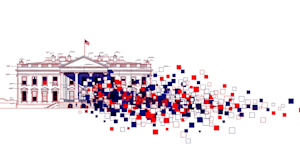
President Donald Trump’s new “Genesis Mission” unveiled Monday, November 24, 2025, is billed as a generational leap in how the USA does science akin to the Manhattan Venture that created the atomic bomb throughout World Struggle II.
The chief order directs the Division of Vitality (DOE) to construct a “closed-loop AI experimentation platform” that hyperlinks the nation’s 17 nationwide laboratories, federal supercomputers, and a long time of presidency scientific knowledge into “one cooperative system for analysis.”
The White Home truth sheet casts the initiative as a approach to “remodel how scientific analysis is carried out” and “speed up the pace of scientific discovery,” with priorities spanning biotechnology, important supplies, nuclear fission and fusion, quantum Information science, and semiconductors.
DOE’s own release calls IT “the world’s most complicated and highly effective scientific instrument ever constructed” and quotes Underneath Secretary for Science Darío Gil describing IT as a “closed-loop system” linking the nation’s most superior services, knowledge, and computing into “an engine for discovery that doubles R&D productiveness.”
The textual content of the order outlines necessary steps DOE should full inside 60, 90, 120, 240, and 270 days—together with figuring out all Federal and associate compute assets, cataloging datasets and mannequin belongings, assessing robotic laboratory infrastructure throughout nationwide labs, and demonstrating an preliminary working functionality for not less than one scientific problem inside 9 months.
The DOE’s own Genesis Mission website provides essential context: the initiative is launching with a broad coalition of private-sector, nonprofit, tutorial, and utility collaborators. The record spans a number of sectors—from superior supplies to aerospace to cloud computing—and contains members comparable to Albemarle, Utilized Supplies, Collins Aerospace, GE Aerospace, Micron, PMT Crucial Metals, and the Tennessee Valley Authority. That breadth alerts DOE’s intent to place Genesis not simply as an inner analysis overhaul however as a nationwide industrial effort linked to manufacturing, vitality infrastructure, and scientific provide chains.
The collaborator record additionally contains lots of the most influential AI and compute corporations in the USA: OpenAI for Authorities, Anthropic, Scale AI, Google, Microsoft, NVIDIA, AWS, IBM, Cerebras, HPE, Hugging Face, and Dell Applied sciences.
The DOE frames Genesis as a national-scale instrument — a single “clever community," an “end-to-end discovery engine,” one supposed to generate new courses of high-fidelity knowledge, speed up experimental cycles, and cut back analysis timelines from “years to months.” The company casts the mission as foundational infrastructure for the following period of American science.
Taken collectively, the roster outlines the technical spine prone to form the mission’s early improvement—{hardware} distributors, hyperscale cloud suppliers, frontier-model builders, and orchestration-layer corporations. DOE doesn’t describe these entities as contractors or beneficiaries, however their inclusion demonstrates that private-sector technical capability will play a defining function in constructing and working the Genesis platform.
What the administration has not offered is simply as hanging: no public price estimate, no specific appropriation, and no breakdown of who pays for what. Main information shops together with Reuters, Associated Press, Politico, and others have all famous that the order “doesn’t specify new spending or a finances request,” or that funding will rely upon future appropriations and beforehand handed laws.
That omission, mixed with the initiative’s scope and timing, raises questions not solely about how Genesis will likely be funded and to what extent, however about who IT may quietly profit.
“So is that this only a subsidy for large labs or what?”
Quickly after DOE promoted the mission on X, Teknium of the small U.S. AI lab Nous Analysis posted a blunt response: “So is that this only a subsidy for large labs or what.”
The road has turn out to be a shorthand for a rising concern within the AI neighborhood: that the U.S. authorities might supply some form of public subsidy for giant AI corporations dealing with staggering and rising compute and knowledge prices.
That concern is grounded in current, well-sourced reporting on OpenAI’s funds and infrastructure commitments. Documents obtained and analyzed by tech public relations skilled and AI critic Ed Zitron describe a value construction that has exploded as the corporate has scaled fashions like GPT-4, GPT-4.1, and GPT-5.1.
The Register has individually inferred from Microsoft quarterly earnings statements that OpenAI misplaced about $13.5 billion on $4.3 billion in income within the first half of 2025 alone. Different shops and analysts have highlighted projections that present tens of billions in annual losses later this decade if spending and income observe present trajectories
Against this, Google DeepMind skilled its current Gemini 3 flagship LLM on the corporate’s personal TPU {hardware} and in its personal knowledge facilities, giving IT a structural benefit in price per coaching run and vitality administration, as coated in Google’s personal technical blogs and subsequent monetary reporting.
Considered in opposition to that backdrop, an formidable federal mission that guarantees to combine “world-class supercomputers and datasets right into a unified, closed-loop AI platform” and “energy robotic laboratories” sounds, to some observers, like greater than a pure science accelerator. IT might, relying on how entry is structured, additionally ease the capital bottlenecks dealing with non-public frontier-model labs.
The aggressive DOE deadlines and the order’s requirement to construct a nationwide AI compute-and-experimentation stack amplify these questions: the federal government is now setting up one thing strikingly just like what non-public labs have been spending billions to construct for themselves.
The order directs DOE to create standardized agreements governing mannequin sharing, intellectual-property possession, licensing guidelines, and commercialization pathways—successfully setting the authorized and governance infrastructure wanted for personal AI corporations to plug into the federal platform. Whereas entry will not be assured and pricing will not be specified, the framework for deep public-private integration is now absolutely established.
What the order doesn’t do is assure these corporations entry, spell out backed pricing, or earmark public cash for his or her coaching runs. Any declare that OpenAI, Anthropic, or Google “simply acquired entry” to federal supercomputing or national-lab knowledge is, at this level, an interpretation of how the framework might be used, not one thing the textual content truly guarantees.
Moreover, the chief order makes no point out of open-source mannequin improvement — an omission that stands out in gentle of remarks final 12 months from Vice President JD Vance, when, previous to assuming workplace and whereas serving as a Senator from Ohio and collaborating in a listening to, he warned in opposition to rules designed to guard incumbent tech corporations and was broadly praised by open-source advocates.
That silence is notable given Vance’s earlier testimony, which many within the AI neighborhood interpreted as assist for open-source AI or, at minimal, skepticism of insurance policies that entrench incumbent benefits. Genesis as an alternative sketches a controlled-access ecosystem ruled by classification guidelines, export controls, and federal vetting necessities—removed from the open-source mannequin some anticipated this administration to champion.
Closed-loop discovery and “autonomous scientific brokers”
One other viral response got here from AI influencer Chris (@chatgpt21 on X), who wrote in an X put up that that OpenAI, Anthropic, and Google have already “acquired entry to petabytes of proprietary knowledge” from nationwide labs, and that DOE labs have been “hoarding experimental knowledge for many years.” The general public document helps a narrower declare.
The order and truth sheet describe “federal scientific datasets—the world’s largest assortment of such datasets, developed over a long time of Federal investments” and direct businesses to determine knowledge that may be built-in into the platform “to the extent permitted by regulation.”
DOE’s announcement equally talks about unleashing “the complete energy of our Nationwide Laboratories, supercomputers, and knowledge assets.”
IT is true that the nationwide labs maintain huge troves of experimental knowledge. A few of IT is already public by way of the Workplace of Scientific and Technical Information (OSTI) and different repositories; some is classed or export-controlled; a lot is under-used as a result of IT sits in fragmented codecs and methods. However there isn’t any public doc to this point that states non-public AI corporations have now been granted blanket entry to this knowledge, or that DOE characterizes previous apply as “hoarding.”
What is clear is that the administration needs to unlock extra of this knowledge for AI-driven analysis and to take action in coordination with exterior companions. Part 5 of the order instructs DOE and the Assistant to the President for Science and Technology to create standardized partnership frameworks, outline IP and licensing guidelines, and set “stringent knowledge entry and administration processes and cybersecurity requirements for non-Federal collaborators accessing datasets, fashions, and computing environments.”
Equally notable is the national-security framing woven all through the order. A number of sections invoke classification guidelines, export controls, supply-chain safety, and vetting necessities that place Genesis on the junction of open scientific inquiry and restricted national-security operations. Entry to the platform will likely be mediated by means of federal safety norms somewhat than open-science ideas.
A moonshot with an open query on the middle
Taken at face worth, the Genesis Mission is an formidable try to make use of AI and high-performance computing to hurry up all the pieces from fusion analysis to supplies discovery and pediatric most cancers work, utilizing a long time of taxpayer-funded knowledge and devices that exist already contained in the federal system. The chief order spends appreciable house on governance: coordination by means of the Nationwide Science and Technology Council, new fellowship packages, and annual reporting on platform standing, integration progress, partnerships, and scientific outcomes.
The order additionally codifies, for the primary time, the event of AI brokers able to producing hypotheses, designing experiments, deciphering outcomes, and directing robotic laboratories—an specific embrace of automated scientific discovery and a big departure from prior U.S. science directives.
But the initiative additionally lands at a second when frontline AI labs are buckling beneath their very own compute payments, when one among them—OpenAI—is reported to be spending extra on working fashions than IT earns in income, and when buyers are overtly debating whether or not the present enterprise mannequin for proprietary frontier AI is sustainable with out some type of exterior assist.
In that surroundings, a federally funded, closed-loop AI discovery platform that centralizes the nation’s strongest supercomputers and knowledge is inevitably going to be learn in a couple of approach. IT might turn out to be a real engine for public science. IT can also turn out to be a vital piece of infrastructure for the very corporations driving at the moment’s AI arms race.
Standing up a platform of this scale—full with robotic labs, artificial knowledge technology pipelines, multi-agency datasets, and industrial-grade AI brokers—would usually require substantial, devoted appropriations and a multi-year finances roadmap. But the order stays silent on price, leaving observers to take a position whether or not the administration will repurpose present assets, search congressional appropriations later, or rely closely on private-sector partnerships to construct the platform.
For now, one truth is simple: the administration has launched a mission IT compares to the Manhattan Venture with out telling the general public what IT will price, how the cash will circulation, or precisely who will likely be allowed to plug into IT.
How enterprise tech leaders ought to interpret the Genesis Mission
For enterprise groups already constructing or scaling AI methods, the Genesis Mission alerts a shift in how nationwide infrastructure, knowledge governance, and high-performance compute will evolve within the U.S.—and people alerts matter even earlier than the federal government publishes a finances.
The initiative outlines a federated, AI-driven scientific ecosystem the place supercomputers, datasets, and automatic experimentation loops function as tightly built-in pipelines.
That path mirrors the trajectory many corporations are already shifting towards: bigger fashions, extra experimentation, heavier orchestration, and a rising want for methods that may handle complicated workloads with reliability and traceability.
Although Genesis is geared toward science, its structure hints at what is going to turn out to be anticipated norms throughout American industries.
The specificity of the order’s deadlines additionally alerts the place enterprise expectations might shift subsequent: towards standardized metadata, provenance monitoring, multi-cloud interoperability, AI pipeline observability, and rigorous entry controls. As DOE operationalizes Genesis, enterprises—notably in regulated sectors comparable to biotech, vitality, prescribed drugs, and superior manufacturing—might discover themselves evaluated in opposition to rising federal norms for knowledge governance and AI-system integrity.
The shortage of price element round Genesis doesn’t immediately alter enterprise roadmaps, however IT does reinforce the broader actuality that compute shortage, escalating cloud prices, and rising requirements for AI mannequin governance will stay central challenges.
Firms that already battle with constrained budgets or tight headcount—notably these accountable for deployment pipelines, knowledge integrity, or AI safety—ought to view Genesis as early affirmation that effectivity, observability, and modular AI infrastructure will stay important.
Because the federal authorities formalizes frameworks for knowledge entry, experiment traceability, and AI agent oversight, enterprises might discover that future compliance regimes or partnership expectations take cues from these federal requirements.
Genesis additionally underscores the rising significance of unifying knowledge sources and making certain that fashions can function throughout numerous, generally delicate environments. Whether or not managing pipelines throughout a number of clouds, fine-tuning fashions with domain-specific datasets, or securing inference endpoints, enterprise technical leaders will seemingly see elevated stress to harden methods, standardize interfaces, and spend money on complicated orchestration that may scale safely.
The mission’s emphasis on automation, robotic workflows, and closed-loop mannequin refinement might form how enterprises construction their inner AI R&D, encouraging them to undertake extra repeatable, automated, and governable approaches to experimentation. On this sense, Genesis might function an early sign of how national-level AI infrastructure is prone to affect private-sector necessities, particularly for corporations working in important industries or scientific provide chains.
Here’s what enterprise leaders needs to be doing now:
-
Anticipate elevated federal involvement in AI infrastructure and knowledge governance. This may occasionally not directly form cloud availability, interoperability requirements, and model-governance expectations.
-
Observe “closed-loop” AI experimentation fashions. This may occasionally preview future enterprise R&D workflows and reshape how ML groups construct automated pipelines.
-
Put together for rising compute prices and contemplate effectivity methods. This contains smaller fashions, retrieval-augmented methods, and mixed-precision coaching.
-
Strengthen AI-specific safety practices. Genesis alerts that the federal authorities is escalating expectations for AI system integrity and managed entry.
-
Plan for potential public–non-public interoperability requirements. Enterprises that align early might acquire a aggressive edge in partnerships and procurement.
Total, Genesis doesn’t change day-to-day enterprise AI operations at the moment. However IT strongly alerts the place federal and scientific AI infrastructure is heading—and that path will inevitably affect the expectations, constraints, and alternatives enterprises face as they scale their very own AI capabilities.
👇Comply with extra 👇
👉 bdphone.com
👉 ultractivation.com
👉 trainingreferral.com
👉 shaplafood.com
👉 bangladeshi.help
👉 www.forexdhaka.com
👉 uncommunication.com
👉 ultra-sim.com
👉 forexdhaka.com
👉 ultrafxfund.com
👉 bdphoneonline.com
👉 dailyadvice.us