
At A Look
Hospitals that deal with Medicaid sufferers ought to replace their eligibility and billing programs now to arrange for the One Huge Stunning Invoice Act (OBBBA), which can deliver main modifications to Medicaid.

Key takeaways:
- New Medicaid reforms below OBBBA are anticipated to deliver elevated monetary danger for hospitals, and over half of suppliers say they face average to excessive danger to Income Cycle Administration (RCM) efficiency.
- Round 40% of healthcare organizations anticipate a necessity for main updates throughout income cycle programs – notably in areas of eligibility, billing and compliance processes.
- In comparison with different varieties of suppliers, hospitals have a greater understanding of OBBBA’s impression on Medicaid, are higher ready and will solely have to make minor course of changes.
The budget reconciliation bill, referred to as H.R. 1 of the One Huge Stunning Invoice Act, was signed into regulation on July 4, Health-care-advocacy/federal-advocacy/changes-medicaid-aca-and-other-key-provisions-one-big” goal=”_blank” rel=”noreferrer noopener”>bringing main shifts to Medicaid, Medicare and Inexpensive Care Act (ACA) market plans.
For hospitals that deal with Medicaid sufferers, OBBBA reforms are reshaping eligibility standards, reimbursements and demand for charity care – and will deliver vital monetary danger. To maintain income cycles on monitor, hospitals should brace for the impression of upper uncompensated care prices, quickly evolving compliance wants, and a rising administrative burden.
Right here’s what hospitals have to find out about OBBBA’s modifications to Medicaid and techniques to enhance resilience.
What do hospitals have to find out about Medicaid modifications?
For hospitals, Medicaid modifications will have an effect on enrollment, eligibility, cost-sharing and funding. These One Beautiful Bill Act Medicaid changes replicate a broader push by lawmakers to enhance fiscal sustainability, curb federal spending and return management to states.
What hospitals have to know in regards to the IT-means-for-medicaid-and-public-coverage/” goal=”_blank” rel=”noreferrer noopener”>upcoming modifications for Medicaid:
- Extra frequent eligibility checks: Starting in 2027, states shall be required to run automated eligibility checks each six months for adults coated below ACA Medicaid growth. Quarterly cross-checking in opposition to federal databases to take away ineligible or deceased enrollees can even develop into obligatory.
- Pause on Biden-era federal guidelines: Below the OBBBA, a moratorium goes into impact on implementing earlier federal guidelines tied to streamlining enrollment in Medicaid and the Youngsters’s Health Insurance coverage Program (CHIP).
- Neighborhood engagement requirement: Beginning in 2027, some Medicaid enrollees, together with adults ages 19 to 64 who don’t have disabilities or dependents, might want to present proof that they work, volunteer or are in education a minimum of 80 hours a month, except exempted.
- Immigration eligibility restrictions: Some lawfully current immigrants will lose their Medicaid eligibility. Moreover, Medicaid funds for emergency Health providers in growth states shall be banned for many migrants.
- Value-sharing necessities: Starting in 2028, Medicaid enrollees with incomes above the federal poverty degree shall be topic to cost-sharing mandates—as much as $35 per service—to make sure beneficiaries have a monetary stake of their care.
- Funding limits and monetary penalties: States will face new limits on how supplier taxes and supplemental funds can be utilized to spice up federal matching funds. States should section down current taxes from 6% to three.5% over a number of years, and penalties shall be issued for failure to recuperate overpayments.
How will rising uninsured volumes create extra monetary danger for hospitals?
Rising uninsured volumes possible imply new monetary dangers for hospitals. Nevertheless, 31% of hospitals say the monetary dangers of Medicaid modifications are low and really feel they will adapt with minimal income impression, whereas 44% say they face average monetary danger.
Right here’s what hospitals can count on:
- Reimbursements are more likely to lower. Value-sharing and funding provisions could constrain reimbursement for Medicaid providers — particularly for hospitals in non-expansion states.
- Sufferers could require extra charity care and higher monetary help to cowl prices. One in five patients at present studies experiencing misery over healthcare prices they will’t afford. As extra Individuals discover themselves with out Medicaid protection, self-pay volumes are more likely to rise, together with emergency uninsured visits.
- Hospitals could also be left with dangerous debt. The newest Congressional Funds Workplace (CBO) information estimates suppliers must shoulder $36 billion in uncompensated care by 2034, with safety-net and rural organizations shouldering the most important impression.
- Working margins could also be impacted. Knowledge additionally suggests key coverage milestones will impression Health system working margins — with the results compounding over the following a number of years. By 2028, margins could go down as much as 17% for programs with a median $1B to $2B web working income system.
How can hospitals improve income cycle programs and processes for OBBBA?
Hospitals should put together for upcoming Medicaid reforms by upgrading key RCM programs and processes. For a lot of income cycle leaders, eligibility and billing processes are high of thoughts, together with assembly new compliance and regulatory necessities.
The next methods may help hospitals maximize system and course of upgrades for OBBA:
1. Leverage collections optimization options
With self-pay affected person volumes rising, overhauling billing system configurations is a high precedence for 42% of hospitals. Billing programs should have the ability to sustain with new Medicaid billing necessities whereas additionally serving to hospitals enhance affected person assortment charges.
Upgrades for hospitals to think about:
- Collections optimization Technology streamlines the collections course of and helps hospitals depart much less income on the desk.
- With instruments like Experian Health’s Collections Optimization Supervisor, billing groups shortly perceive a affected person’s capacity and willingness to pay.
- IT additionally identifies charity eligibility and might implement efficient and compassionate outreach — making a smoother affected person monetary journey.
2. Cut back protection gaps with real-time eligibility and discovery
Hospitals can higher cut back the danger of protection gaps by proactively strengthening front-end eligibility and monetary clearance processes. For 43% of hospitals, upgrading programs to deal with extra frequent eligibility checks and confirm compliance with new Medicaid work necessities is a should.
Upgrades for hospitals to think about:
Health insurance coverage lookup instruments, comparable to Experian Health’s Eligibility Verification and Protection Discovery, assist suppliers simply confirm protection previous to service. Protection Discovery makes use of proprietary information and superior machine studying to determine unknown or forgotten insurance coverage protection throughout the complete income cycle – earlier than, throughout, and after care.
Protection Discovery recognized over $60 billion in insurance coverage protection throughout 45+ million distinctive affected person instances in 2024 alone, turning missed alternatives into paid claims.
Correct affected person Information at consumption is crucial to lowering declare denials. Collectively, Experian Health’s Affected person Entry Curator™ (PAC) and AI Benefit™ options assist guarantee correct affected person Information and cleaner declare submissions. PAC makes use of synthetic intelligence to routinely verify and confirm affected person demographic Information in real-time. AI Benefit works downstream to foretell declare outcomes mid-cycle and push pressing duties to the entrance of the queue.
3. Assist affected person cost readiness with estimates and transparency
By 2034, the Congressional Funds Workplace (CBO) estimates 10 million people will lose Medicaid or CHIP – possible shifting extra sufferers to self-pay. Worth transparency rules are additionally getting tighter, making compliance with new transparency legal guidelines a precedence.
Upgrades for hospitals to think about:
- 81% of sufferers report that correct estimates assist them higher put together to pay their medical payments. Options like Experian Health’s Affected person Estimates generate real-time estimates utilizing up-to-date payer contracts, payment schedules and historic declare information.
- Affected person Estimates additionally ensures hospitals are prepared utilizing 4 built-in studies that align estimates with actuals, monitor collections and show compliance.
- Self-service cost portals, like PatientSimple® from Experian Health, enable sufferers to conveniently entry customized estimates.
- Complementary instruments, like Affected person Monetary Advisor, textual content estimates to sufferers or obtain PDFs in-office.
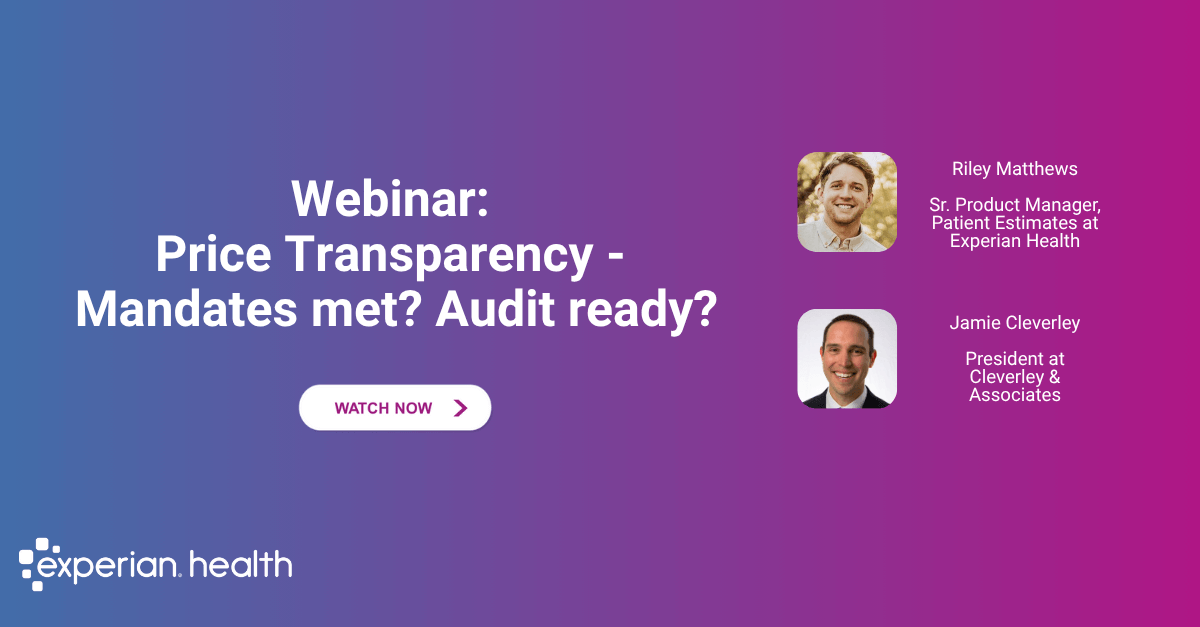
The CMS Hospital Worth Transparency Rule is evolving—and so are the expectations. Discover out what’s altering, what’s at stake, and methods to put together your group for audit-readiness and long-term success.
4. Automate charity care to offset uncompensated care
As sufferers lose Medicaid protection, hospitals may see elevated affected person want for monetary help, like charity care packages.
A 3rd (33%) of suppliers really feel Medicaid monetary help or charity screening processes are ripe for upgrades. Moreover, 30% of hospitals say name middle coaching and scripting for Medicaid affected person monetary communications wants enchancment.1
Upgrades for hospitals to think about:
- Automating monetary help screening with instruments like Affected person Monetary Clearance can foster compassionate monetary conversations and guarantee extra sufferers are related to assist at scale.
- Affected person Monetary Clearance makes use of real-time information to determine sufferers who could qualify for charity care – recommending appropriate cost plan choices whereas lowering administrative burden.
The underside line: Hospitals should future-ready operations for an unsure payer combine
Below the One Huge Stunning Invoice Act, Medicaid insurance policies are evolving quickly – with many unknowns forward. As hospitals work laborious to bolster key income cycle administration processes and programs to be able to decrease monetary dangers, a versatile, Technology-first method could show to be essential.
Scalable, automated options assist organizations get eligibility proper, decrease the danger of uncompensated care and allow sufferers to higher perceive their monetary obligations. With the best instruments in place, hospitals can higher climate any new challenges OBBBA brings.
Learn how Experian Health helps hospitals put together for Medicaid reforms by modernizing eligibility checks and lowering publicity to income loss.
Sources:
1. Experian Health – OBBBA 2025 Analysis. Quantitative survey of 200 healthcare professionals accountable for monetary, billing and RCM choices. This survey was performed in October 2025.
👇Comply with extra 👇
👉 bdphone.com
👉 ultractivation.com
👉 trainingreferral.com
👉 shaplafood.com
👉 bangladeshi.help
👉 www.forexdhaka.com
👉 uncommunication.com
👉 ultra-sim.com
👉 forexdhaka.com
👉 ultrafxfund.com
👉 bdphoneonline.com
👉 dailyadvice.us