
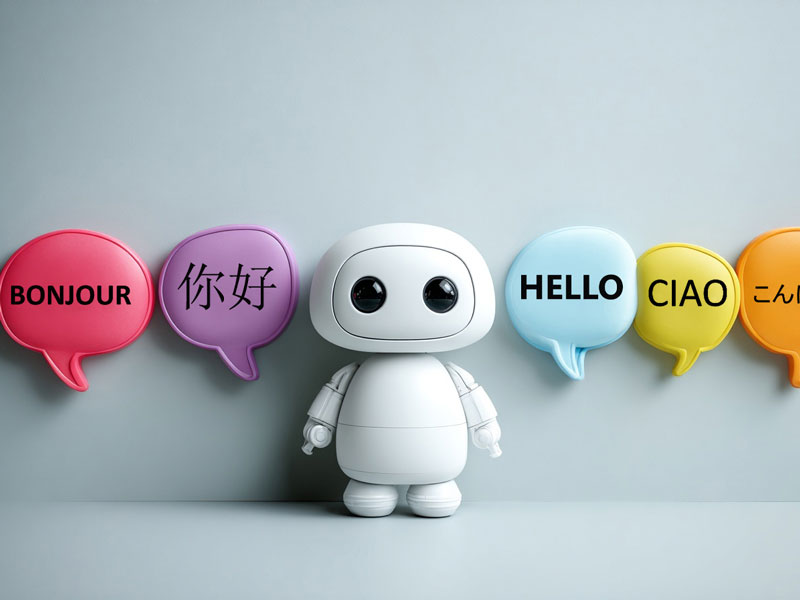
 
IT can actually perceive us. The subsequent frontier of synthetic intelligence isn’t automation however empathy: Technology that unlocks international understanding, thus augmenting human connection quite than eroding IT“/>
Creator: Marco Trombetti, CEO, Translated
Because the checklist of firms citing AI efficiencies because the rationale for employees restructuring grows, many have rushed to take a position about the way forward for work and to surmise that the subsequent logical step for AI is in the direction of changing people within the workforce. However, from the place I sit, on the intersection of translation and AI sectors, the extra compelling transformation isn’t merely what AI replaces, however how AI is studying, or failing, to grasp the human dimension – ultimately the human contact – behind each motion or activity.
As a real believer that language is a very powerful issue for human evolution, I based Translated in 1999 to assist folks translate their phrases, and certainly cultures, everywhere in the world, by permitting everybody to grasp and be understood in their very own language. Since AI is powering the likelihood for elevated connection, I imagine that our business is the right vantage level from which to contemplate the broader world.
Firstly, as a result of IT was with the mix of language and AI that noticed the primary mass adoption of use: in giant language fashions that reply our questions in full sentences and tailor their responses based mostly on our preferences. A long time of analysis on machine translation – and certainly language – have enabled this. AI is in flip enabling the interpretation of language. Nevertheless, regardless of its growing pace and accuracy, one factor stays abundantly clear to consultants: IT doesn’t exchange the necessity for human sensitivity. As a substitute, IT can carry out the repetitive and monotonous duties that occupy the time of expert consultants and permit them to concentrate on extra complicated parts of their roles, most notably these elements of translations which are most steeped in emotion and in ‘human-ness.’
Human-centred intelligence
For a lot of companies, the dialogue round AI nonetheless revolves round productiveness positive factors and potential labour displacement: ‘Which Jobs will go?’ and ‘What number of will stay?’ These questions we see posed again and again and are, after all, necessary to supply solutions to, not just for these fearing substitute however for future generations questioning what the world of labor will appear like for them. Maybe although, the extra necessary questions are ‘What do people do finest?’ and ‘How can AI allow us to do extra of this?’
The query is not which duties AI can carry out, however how IT can elevate human potential
Undoubtedly, for AI to work in partnership with a human workforce, the subsequent part of progress can be in the direction of higher understanding us. On this respect, Translated is main a pioneering challenge: DVPS (Diversibus Viis Plurima Solvo), backed by a €29m European seed funding throughout 20 companions in 9 international locations, exactly to deal with this problem. DVPS is about shifting past language fashions that digest textual content and pictures collected prior to now, and into fashions that sense imaginative and prescient, audio, and sensor enter, fashions that have interaction in actual time with the bodily world and have a better contextual consciousness.
Equally, this progress have to be assessed and managed appropriately, and international conversations are needed to realize this. I used to be not too long ago invited to take part within the World Assembly on Human Fraternity in Rome. The dialogue noticed high AI scientists, together with Nobel Laureate Geoffrey Hinton, probably the most cited AI scientist Yoshua Bengio, and professor and main creator Stuart Russell, come collectively to share their perception with Pope Leo XIV on the social, cultural and moral dimensions of AI. The message was clear: AI should serve humanity, not erode its dignity, and have to be anchored in dialogue and care. IT is with no shock that this group agreed that the 2 most important constructive impacts AI can have are ‘scientific discovery’ and ‘international human understanding.’
Main within the age of understanding
For leaders and organisations, the trail forwards calls for a shift in perspective. The query is not which duties AI can carry out, however how IT can elevate human potential. Essentially the most profitable firms can be people who spend money on understanding and context quite than simply effectivity. True management within the age of AI means embedding empathy and ethics on the core of innovation, guaranteeing that Technology amplifies what’s most human about us: our means to care, to interpret and to attach.
The subsequent decade of AI won’t be outlined by fewer Jobs and sooner machines. IT can be outlined by machines that perceive contexts, feelings, and human values, and by people who leverage that understanding to do what solely people can do: construct relationships, innovate tradition, and lead with which means.
When machines lastly grasp {that a} sentence isn’t just a sentence, however an expression of human intent, once they discern not simply phrases however tone, gesture, and cultural context, then we’ll emerge from automation into augmentation. That’s the second when AI actually turns into a associate in human progress. The true progress of AI won’t be measured by what number of Jobs disappear, however by what number of new types of human worth emerge.
👇Comply with extra 👇
👉 bdphone.com
👉 ultractivation.com
👉 trainingreferral.com
👉 shaplafood.com
👉 bangladeshi.help
👉 www.forexdhaka.com
👉 uncommunication.com
👉 ultra-sim.com
👉 forexdhaka.com
👉 ultrafxfund.com
👉 bdphoneonline.com
👉 dailyadvice.us