
 
Writer: Alex Katsomitros, Options Author
As considered one of Europe’s main digital banks, Bunq hoped for fast approval when IT utilized for a US banking licence in 2023. One yr later, the Amsterdam-based fintech agency withdrew its utility resulting from a misalignment between US and Dutch regulators. The corporate is now making a second try, submitting in April for a broker-dealer licence that can permit its US customers to spend money on shares, mutual funds and ETFs. That is solely step one in an bold American journey, says a Bunq spokesperson, including that IT will “begin by making investing easy and absolutely clear, with no hidden charges,” presumably a jab at its US opponents and their practices. Bunq, which boasts 17 million European customers, plans to reapply for a banking licence later this yr.
Development above all
Bunq isn’t the one European digital financial institution that’s searching for enlargement throughout the Atlantic. UK digital banking leaders Revolut and Monzo have additionally been eyeing the US market, using a wave of renewed curiosity from traders following a post-pandemic funding disaster. The technique is a no brainer, given slower buyer acquisition in Europe after a decade of manic progress and intensifying competitors that compresses margins. A way of urgency can be taking up the fintech market as IT matures and fewer digital banks (often known as neobanks) are anticipated to change into dominant globally. Some are within the black after years of losses; 2024 was Bunq’s second consecutive yr of profitability.
One drawback for neobanks is that they lag behind incumbents within the quintessential banking enterprise: credit score extension. Their lending operations are comparatively small, which means that income has to come back from cost charges and premium accounts.
Regulation has additionally change into stricter. “Europe has change into more and more hostile floor for fintechs, with tighter funding circumstances and harder laws throttling progress,” says Carrie Osman, founding father of Cruxy, a UK progress consultancy working with fintech corporations. A wave of regulatory reform throughout the Atlantic, together with the current ‘1033 rule’ that has unlocked entry to shopper monetary knowledge, has put the US on their radar, she provides. “The upside is that as a result of they function below extra stringent laws and thinner margins in Europe, they’re higher positioned to innovate in transparency, price effectivity and cross-border performance,” argues Alessandro Hatami, former chief working officer of digital banking at Lloyds Banking Group and writer of Inclusive Finance: How Fintech and Innovation Can Rework Monetary Inclusion.
A regulatory minefield
Regardless of these reforms, navigating the nation’s Byzantine regulatory panorama stays an impediment to conquering the $24trn US market. Acquiring a banking licence requires approval from state and federal regulators, whereas state-by-state cash transmission licences are essential to function in a number of states. On high of a banking constitution, aspiring lenders must safe deposit insurance coverage and proof of ample funds. Rising US protectionism provides an additional barrier, says Hatami: “Present instability in engagement with international suppliers is presumably making the rollout of a European fintech within the US problematic.”
Earlier makes an attempt faltered resulting from underestimating the complexity of US regulation
Coping with US cost infrastructure can be difficult. In Europe, neobanks profit from interbank cost techniques that allow prospects to make transactions seamlessly, whereas US banks have been slower in adopting related applied sciences. European entrants who view the US as a single market have struggled, says Dave Glaser, CEO of Dwolla, a US cost service supplier, whereas alternatives exist for many who recognise that modernising their cost infrastructure includes adapting to America’s complicated monetary spine.
Previous makes an attempt to crack the US market have proved traumatic. Monzo withdrew its banking licence utility in 2021 when regulators warned that approval was unlikely. Berlin-based neobank N26 closed down its US operations in 2021, having failed to supply there its profit-making membership offers. Revolut’s delay in acquiring a UK banking licence made a US utility virtually unimaginable.
And not using a banking licence, digital banks are unable to generate income by means of credit score merchandise. “Earlier makes an attempt faltered resulting from underestimating the complexity of US regulation, overestimating model pull and launching and not using a compelling native worth proposition,” says David Donovan, head of economic companies North America at digital transformation consultancy Publicis Sapient.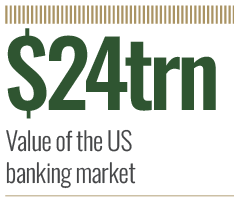
For fintechs unable to acquire their very own banking constitution, partnering with a US financial institution is a no brainer. Monzo has partnered with Sutton Financial institution to carry customers’ deposits. Cleo AI, a UK fintech which provides personalised monetary help by means of a chatbot, has partnered with Thread Financial institution and WebBank and boasts seven million prospects in North America. The draw back is that companions retain a share of card transaction charges, a serious income supply since they’re considerably greater within the US. “IT eats into your margins; you will have much less autonomy round product selections; and you’re usually tied to the maturity of the accomplice financial institution’s threat and compliance processes, which may really feel very outdated,” argues Stephen Greer, banking trade marketing consultant at analytics platform SAS, including: “This implies the entry level to the US market is constructing companies on high of a easy demand deposit account, which is a really low-margin product and sometimes doesn’t outpace your price to amass new prospects.”
The current collapse of Evolve Financial institution, triggered by its accomplice Synapse’s mismanagement of buyer funds, has additionally intensified regulatory scrutiny of such partnerships. Extra bold neobanks have determined that going IT alone is a guess value taking. Revolut provides its card by means of its accomplice Lead Financial institution, but in addition has a US dealer licence and is now searching for its personal banking licence.
“The most effective technique for a European fintech is to create a US entity and nurture this by tapping into the US investor markets, from enterprise capital all the way in which to IPO. And to minimize its European roots so far as doable,” says Hatami.
Fierce competitors
US retail banking is a aggressive market, with over 3,000 establishments together with regional banks, financial savings banks and credit score unions, which means that European fintechs have to be ready for slower progress and better buyer acquisition prices. US fintechs like Venmo, SoFi, Zelle and Chime have huge advertising budgets. “Phrase of mouth and referrals can solely get you to this point within the US,” says Dylan Lerner, a digital banking analyst at Javelin Technique & Analysis, a US market intelligence supplier. “You might need to spend some severe cash to ascertain your self – from heavy spending on promoting to naming rights on stadiums and sports activities sponsorships.”
The flipside is that new entrants can concentrate on area of interest markets which can be giant sufficient to be worthwhile. European neobanks can supply one-stop banking options to prospects hungry for digital-first experiences with fancy add-ons on high of financial savings accounts, reminiscent of investing instruments and real-time spending analytics. “Many US fintechs are constructed on banking-as-a-service fashions that restrict management and innovation. European corporations, having constructed extra of their stack, can differentiate on each price and customisation,” says Donovan.
Remittances is one potential income stream, notably providing cross-border and multicurrency companies to round 20 million US-based immigrants. A living proof is the success of Sensible, a platform that “addresses worldwide cash motion with a readability and price construction that’s nonetheless unusual within the US,” Hatami says. Bunq can be focusing on digital nomads, “particularly the practically 5 million European expats who battle with banking forms whereas pursuing a location-independent way of life,” in accordance with the agency’s spokesperson.
Most firms need to listing on Nasdaq or NYSE, increase a tonne of cash and money out
Cultural variations additionally come into play. American prospects are extra credit-focused than Europeans and are consistently provided buyer rewards and loyalty offers, which means that new entrants should present costly perks to lure them. Their loyalty to conventional banks can be rock-solid. “Individuals are largely happy with their monetary establishments. They aren’t keen to change banking relationships,” says Lerner from Javelin Technique & Analysis.
A current survey by the agency discovered that 77 p.c of customers had been unlikely to change away from their major monetary establishment. Overseas neobanks centered on business-to-customers options face an uphill battle resulting from comparatively excessive buyer acquisition prices, argues Kevin Fox, chief income officer at Thredd, a UK funds processor that just lately expanded into the US and has helped a number of neobanks scale internationally. “And not using a pivot to some differentiated credit score product, pay as you go and debit choices usually don’t generate sufficient income to warrant these prices,” Fox notes, including that fintechs shifting to a business-to-business mannequin by offering options to SMEs, reminiscent of expense administration companies, have a greater likelihood of US success.
Surprisingly sufficient, the most important alternative for European fintechs could also be disrupting the technological backwardness of the US banking system. Maybe the starkest instance is the persistence of cheques, nonetheless broadly utilized by banks and companies, in a digital period. “What they [European neobanks] deliver is primarily tech: quick onboarding, seamless person expertise, a completely digital expertise. That isn’t one thing the US banking system excels at but,” says Arthur Azizov, founding father of fintech alliance B2 Ventures.
Going public
For European fintechs, the most important prize that comes together with US presence is the opportunity of a public itemizing. US IPOs sometimes obtain greater valuations and supply entry to the world’s largest funding pool. Revolut and Monzo are anticipated to go public by the tip of the last decade, and their management has indicated desire for a US itemizing. Such selections, nonetheless, have a political dimension that may trigger friction at house. “Revolut was just lately granted a banking licence – most likely partially due to a promise to listing in London, not within the US. Most firms need to listing on Nasdaq or NYSE, increase a tonne of cash and money out. However governments need to preserve their unicorns near house,” says Azizov, including: “For a severe US enlargement, they might want to go all in: full groups, full infrastructure, full dedication. They could even want to maneuver their HQ.” For sceptics although, going public is perhaps a untimely step and not using a clear US-orientated technique and profitability mannequin – the latter being the holy grail that can seal their place within the banking world.
“The true endgame is profitability at scale. That is one thing that has eluded most fintechs, no matter itemizing venue,” says Donovan from Publicis Sapient. “IT would show {that a} digital-native, product-led mannequin can work even on the planet’s best and entrenched banking market.”
👇Comply with extra 👇
👉 bdphone.com
👉 ultractivation.com
👉 trainingreferral.com
👉 shaplafood.com
👉 bangladeshi.help
👉 www.forexdhaka.com
👉 uncommunication.com
👉 ultra-sim.com
👉 forexdhaka.com
👉 ultrafxfund.com
👉 bdphoneonline.com
👉 dailyadvice.us